Explainer: City of Phoenix’s proposed ban on medical care in city parks
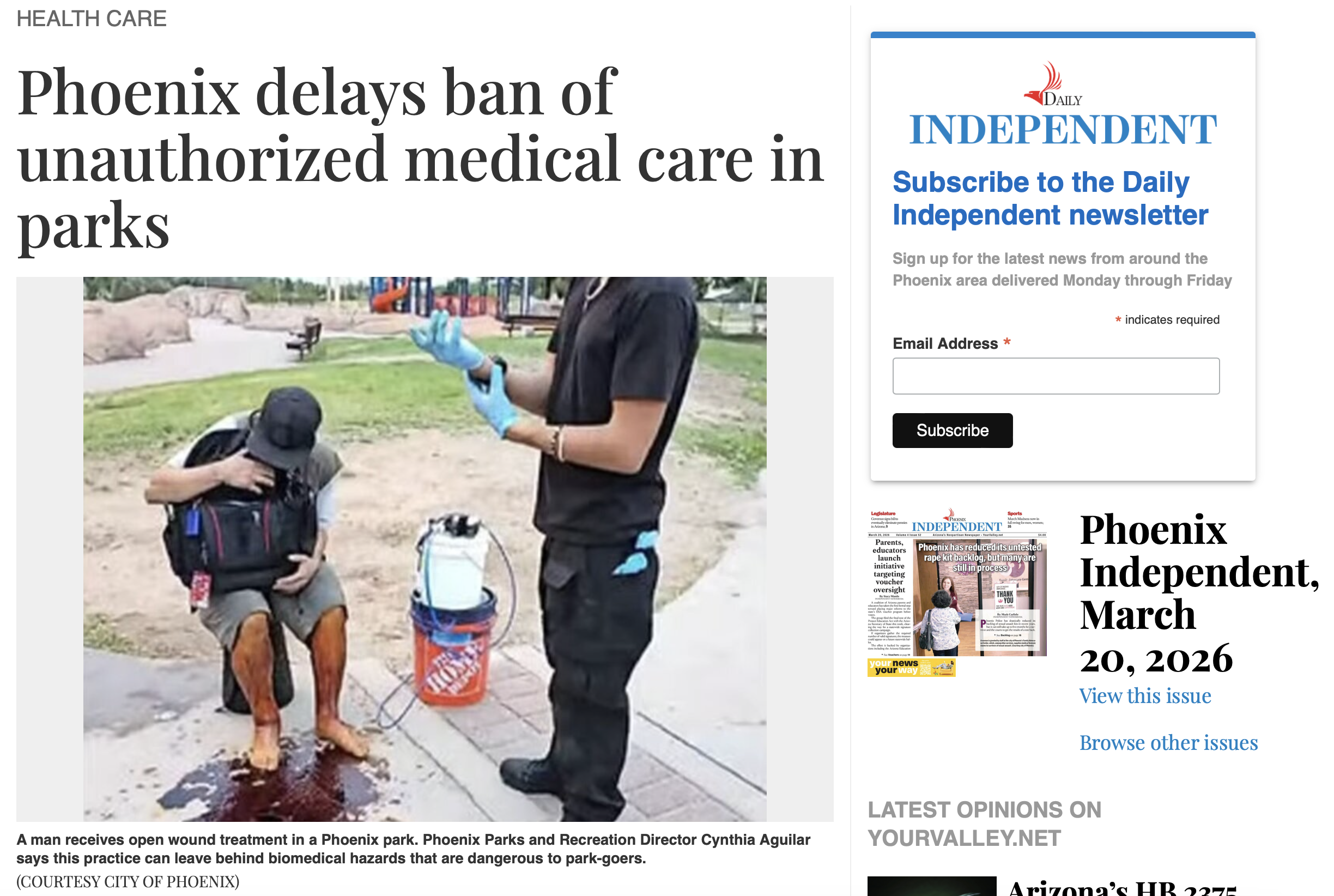
Photo taken at Cave Creek Park - Sweetwater. This kind of informal “treatment” is what the city ordinance is intended to eliminate. via yourvalley.net article
Phoenix City Council is considering an ordinance that would ban unauthorized medical care in city parks.
Activists have pushed back aggressively, claiming that this ordinance will lead to deaths.
The ordinance includes provisions for targeted care, as long as it is properly organized and implemented by qualified individuals or organizations.
The conversation surrounding Phoenix’s proposed ordinance to restrict unauthorized medical care in city parks (Ordinance G-7467) has been loud, but remarkably one-sided. If you’ve been following the headlines, you’ve likely seen a narrative dominated by activists and outreach groups warning of a "public health catastrophe."
But there is another side to this story—the one lived by the families, joggers, and residents who actually live near these parks. For those of us who have seen our local green spaces transformed into unsanctioned, unregulated field clinics, this ordinance isn't about "criminalizing care." It’s about public safety, basic hygiene, and professional accountability.
When "Care" Leaves a Biohazardous Trail
The primary argument from advocates is that they are "meeting people where they are." But "where they are" is often ten feet away from a playground or a public picnic bench.
Neighborhood residents have consistently reported finding the grim aftermath of these unsanctioned medical events:
Used syringes and needles tucked into bushes or left in the grass.
Biohazardous waste, including blood-soaked gauze and bandages, discarded in standard park trash cans (or simply left on benches).
Large chemical stains from iodine and other medical prep fluids on public concrete.
When a 3-year-old at Maryvale Park picks up a discarded needle—as Vice Mayor Kesha Hodge Washington noted in recent discussions—the conversation about "harm reduction" needs to include the harm being done to the general public. Our parks are not equipped with sharps containers or biohazard disposal protocols. They are designed for recreation, not for the disposal of medical waste.
The Problem with "Amateur" Medicine
Perhaps the most concerning aspect of the current situation is the lack of professional oversight. While established organizations like Circle the City utilize licensed medical professionals, the same cannot be said for every "mutual aid" group setting up shop in our parks.
We are seeing a rise in untrained, unlicensed volunteers performing complex tasks like wound debridement or administering injections. This isn't just a legal technicality; it’s a massive liability and a health risk.
Infection Risk: Providing wound care in a dusty, outdoor environment without sterile fields increases the risk of secondary infections for the patient.
Lack of Continuity: When a volunteer "treats" a serious infection in a park and then disappears, there is no follow-up, no medical record, and no accountability if the patient’s condition worsens.
Professional Standards: Valid medical care requires a license for a reason. By bypassing the city’s permit process, these groups are avoiding the basic health and safety standards that every other clinic in Phoenix must follow.
A Balanced Approach to Public Spaces
The city has already made significant concessions. The ordinance (which is now slated for a June 1, 2026 effective date to allow for more dialogue) specifically exempts:
First responders (Fire/EMS).
Emergency aid, including the administration of Naloxone.
Authorized events that have gone through the proper permitting process.
This isn't a "ban on helping people." It is a requirement that if you want to provide medical services, you must do so responsibly, with the proper insurance, waste disposal plans, and professional credentials.
Reclaiming Our Parks
For too long, the "neighbor's perspective" has been dismissed as "NIMBYism." But wanting a park where you don't have to scan the grass for needles before letting your dog run isn't radical—it’s the bare minimum we should expect from our city.
We support a Phoenix where the vulnerable get high-quality, professional care. But that care belongs in mobile clinics, doctors' offices, and authorized centers—not scattered across the park benches where our children play.